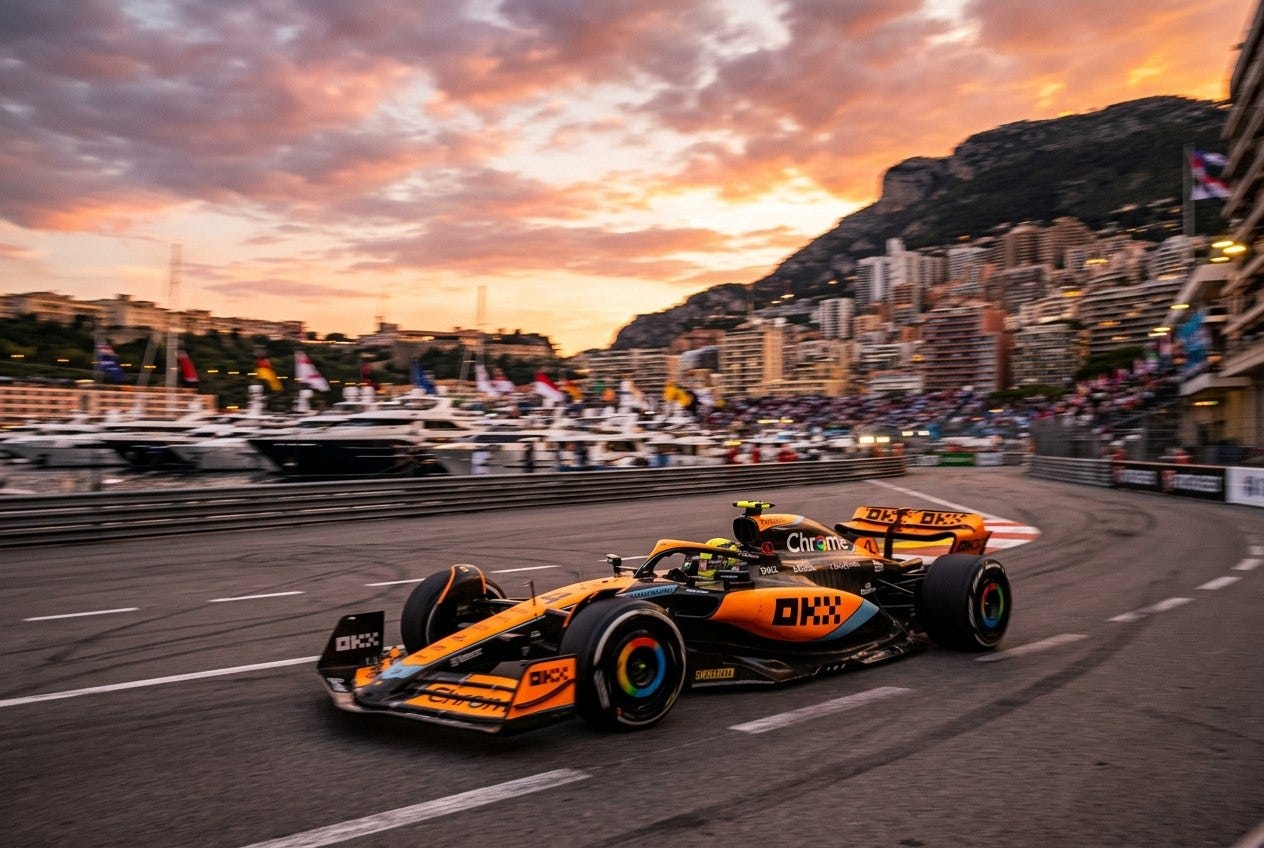
Here’s a fun one for you trivia fans: McLaren is celebrating their 1000th race start at Monaco this weekend. Except, according to our records at F1DailyBrief, it’s actually their 999th. After Canada, we’re showing 998 starts. Add Monaco, that’s 999. Not quite the milestone the Woking outfit is painting it to be.
So what’s the missing two? Let me save you a Google search: it’s the 2026 Chinese Grand Prix, where both Lando Norris and Oscar Piastri failed to start due to electrical issues on the formation lap. A proper double DNS. And therein lies the question that’s been bubbling up in the statistical corners of the paddock: does a DNS count as a race start?
Buckle up, because I’m about to argue both sides with the kind of enthusiasm usually reserved for tire strategy debates.
The Case For Counting It
Look, those boys showed up. They weighed in. They sat in the car. They fired it up and rolled out for the formation lap. The problem wasn’t a lack of attempt—the problem was the car betrayed them after they’d done everything required to be there. They were present, ready, and physically in the thing that makes an F1 car an F1 car.
From a human perspective, this was a race weekend for Norris and Piastri. They traveled to China. They did the media. They sat through briefings. They put on their helmets and climbed in. If we’d asked them “how was your weekend?” they’d have said “shite, the car died.” Not “I didn’t go to the race.”
The spirit of the thing—the effort, the preparation, the intent—counts for something. These aren’t voluntary no-shows. This is a team failure, not a driver failure. The car said no, and the drivers had no say in it.
The Case Against
Now, let me channel every technical director I’ve ever worked with: the numbers are the numbers. A race start is when you cross the start line under green flag conditions. That’s the definition. It’s been the definition since the sport figured out how to count things.
The formation lap isn’t racing. It’s the preamble. The pre-show. The opening act before the main event. You can do a formation lap and still not start the race—ask anyone who’s ever stalled on the grid. The moment matters. The green flag matters. If you didn’t cross it, you didn’t start.
And here’s the cold reality: the teams don’t count DNS as starts. The FIA doesn’t count DNS as starts. The official records—the ones that go into the history books—don’t count DNS as starts. McLaren knows this. They also know that 1000 sounds better than 998, and that Monaco is a better venue for a celebration than... well, anywhere else.
My Take?
Honestly? I see both sides. The “spirit” argument has weight—those drivers did everything short of actually racing. But the definition argument has decades of precedent, and definitions matter. Otherwise, where does it end? Do we count practice starts? Lap 1 incidents where a car retreats to the pits? It’s a slippery slope dressed up as sentiment.
The honest answer is: McLaren’s 1000th race start is technically the next race after Monaco — round 7 of 2026. But if they want to celebrate in Monaco—with the history, the glamour, the harbour full of billionaire yachts—I’m not going to be the one to tell them no.
Sometimes the rounding error works in your favour. And sometimes you just have to wait for the next race.
Here’s to 1000 (or 999, or 1001—I genuinely don’t know anymore). Either way, McLaren’s been around for an awful long time. And that’s worth celebrating regardless of how you count it.